
What Is Hempcrete? A Practical Guide for Builders
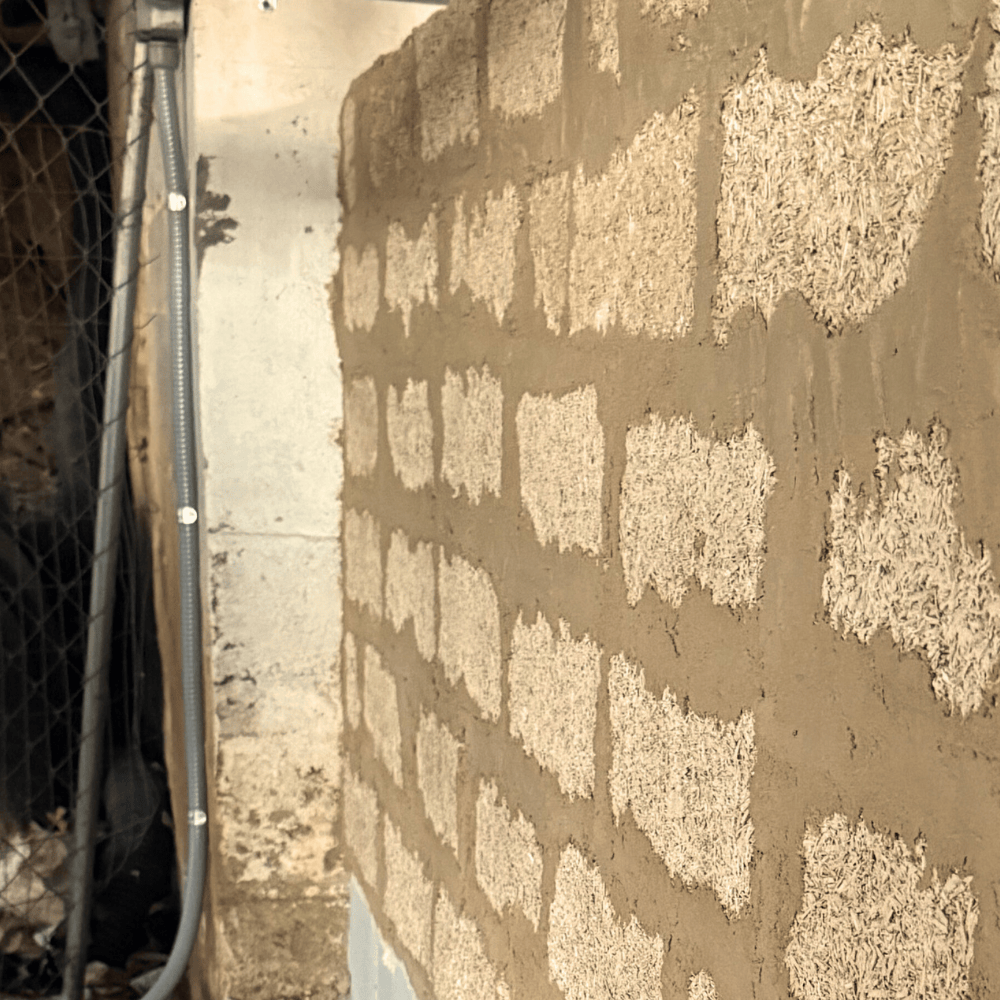
Hempcrete is a non-structural building material made from hemp hurd, a lime-based binder, and water. It is used as insulating infill around a structural frame.
Despite the name, hempcrete is not concrete. It is not intended for foundations, retaining walls, or any application where the material must carry a building’s primary loads.
For builders, architects, and homeowners, the useful question is not whether hempcrete replaces every conventional wall material. It does not. The question is where a hemp-lime wall assembly makes sense, what it needs from the structural frame and detailing, and how to evaluate it for the project in front of you.
What Hempcrete Is Made Of
Hempcrete combines three main ingredients:
- Hemp hurd: The woody inner portion of the industrial hemp stalk
- Lime-based binder: The mineral binder that coats and bonds the hurd
- Water: Used to activate and place the mix
The proportions and density vary by application. A wall mix is designed for non-structural infill and thermal performance, while roof or floor applications may use a different mix design.
That is why project teams should work from the specifications for the selected system rather than treating every hempcrete mix as interchangeable.
Is Hempcrete Load-Bearing?
No. Hempcrete belongs inside or around a structural system; it does not replace that system.
A timber, steel, or other engineered frame carries roof, floor, and wind loads. Hempcrete provides the non-structural infill layer that contributes to the building envelope.
Keeping those roles distinct is important when a project team is comparing hempcrete with concrete, masonry, or a framed cavity-insulation wall.
How Does Hempcrete Work as Part of a Wall?
A hemp-lime wall can combine several building-envelope functions in one continuous infill layer. Its thermal, moisture, air-control, finish, and structural behavior depend on the exact assembly.
Wall thickness, frame layout, binder, plaster or finish system, openings, climate, and installation quality all matter.
For that reason, a simple per-inch comparison does not fully describe a finished wall. R-value can be useful as one input, but a project team should evaluate the complete assembly and its tested or documented performance. The same applies to moisture behavior, fire performance, acoustics, and air control.
If you are comparing hemp-lime systems with masonry, start with Pure Industrial’s hempcrete blocks and then review the documentation for the specific wall system under consideration.
Common Installation Methods
Hempcrete is commonly installed in three ways.
Cast in Place
A wet mix is placed into temporary formwork around the structural frame and compacted according to the selected system’s instructions. The forms are removed as the wall gains stability, and the assembly is allowed to dry before the final finish is applied.
Sprayed Application
Some systems use specialized equipment to apply the mix against formwork or a prepared substrate. This can help on larger projects, but the equipment, mix design, and installation crew need to be appropriate for the chosen system.
Prefabricated Blocks
Hempcrete blocks are manufactured and cured before arriving at the site. They can simplify some job-site logistics while still requiring the right structural, moisture, and finish details.
Explore Pure Industrial’s hempcrete blocks for the material side of that conversation.
What About R-Value, Fire, and Moisture?
These are three of the questions builders ask most often, and each needs an assembly-specific answer.
- Thermal performance: Hemp-lime mixes have published thermal-performance ranges, but density, thickness, finish layers, and framing affect the finished wall.
- Fire performance: Fire ratings belong to tested wall assemblies, not a broad material claim. Ask for documentation for the exact wall configuration proposed for the project.
- Moisture behavior: Hemp-lime materials are often selected for vapor-open wall assemblies, but they still need proper foundations, flashing, roof overhangs, drainage, finishes, and project-specific detailing.
The right approach is to involve the project’s architect, engineer, code official, installer, and material supplier early enough to document the full assembly rather than trying to solve those questions after major design decisions are locked.
What Is the U.S. Code Path?
The 2024 International Residential Code Appendix BL includes a code reference for hemp-lime construction.
Whether and how that appendix applies depends on the code adopted by the jurisdiction and the scope of the project.
Commercial and other projects outside the applicable residential-code scope may require an alternative-materials-and-methods review, project-specific documentation, or other approval paths. A local building official and the project design team should confirm the route early in design.
When Hempcrete May Be a Good Fit
Hempcrete is worth evaluating when a project team is looking for a non-structural, mineral-bound infill system and is prepared to design the wall as a complete assembly.
It is not a universal substitute for cavity insulation, foam, masonry, or concrete in every application.
A good next step is to start with the material and project requirements: wall type, structural frame, location, schedule, finish system, code pathway, and desired performance goals.
Explore Pure Industrial’s Research library for additional hemp material information, or contact Pure Industrial to discuss material needs.