
Industrial Hemp Materials for Manufacturers: Bulk Supply, Fiber & Hurd Performance
For manufacturers, interest in industrial hemp usually starts with a practical problem — not sustainability messaging.
Supply chains are volatile. Wood pricing swings wildly. Imported materials come with delays, tariffs, and quality issues. Pressure is increasing, but performance still has to come first.
Industrial hemp is starting to matter in manufacturing because it checks multiple boxes at once: performance, scalability, and domestic supply — when it’s processed correctly.
The three hemp inputs manufacturers actually care about
Industrial hemp is valuable because it produces distinct material streams, each suited to different manufacturing applications.
Bast fiber (the outer bark)
This is the strong, fibrous outer layer of the hemp stalk. Depending on how it’s processed, bast fiber becomes either technical fiber used in non-wovens, insulation, mats, and composites, or refined (cottonized) fiber used in textiles, yarns, and composite reinforcement.
Fiber length, cleanliness, and retting quality ultimately determine where it can be used and whether it integrates smoothly into existing manufacturing lines.
Hurd (shivs)
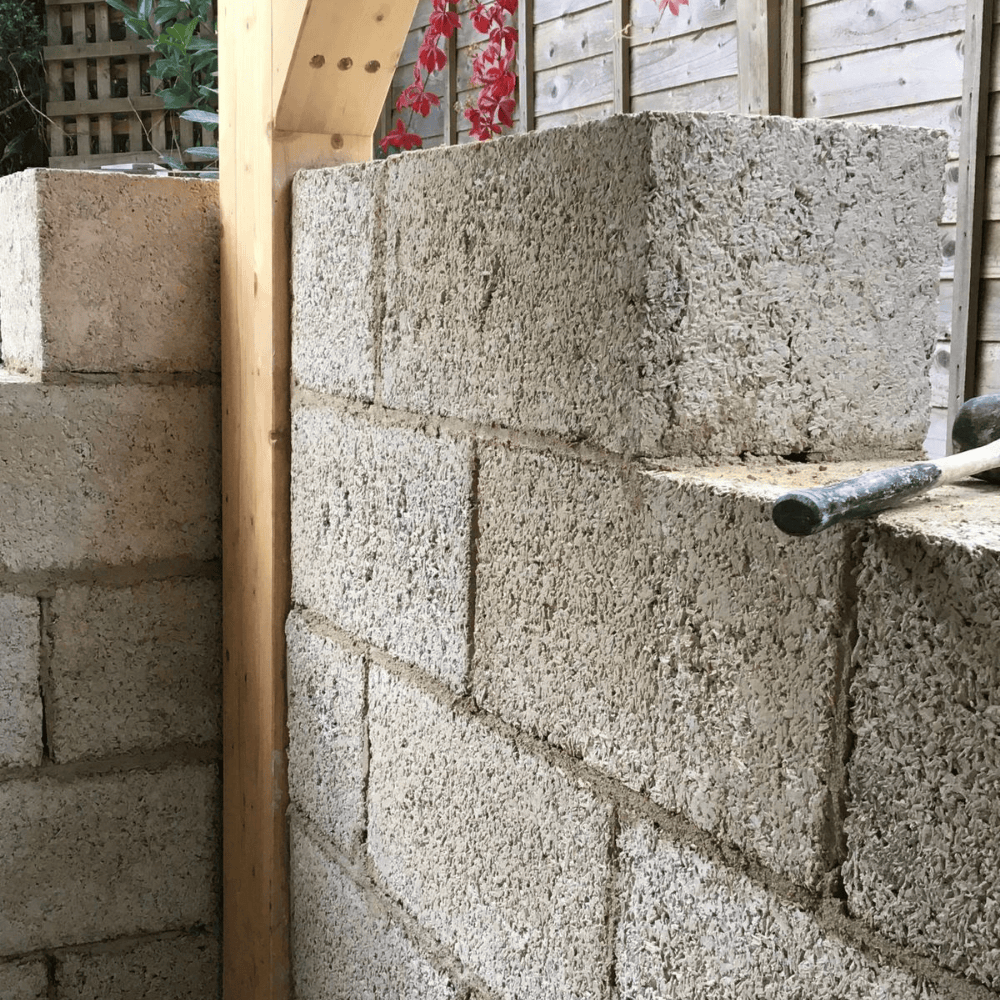
The hurd is the woody inner core of the hemp stalk and makes up roughly 75% of the plant by weight. Manufacturers use hurd in hempcrete blocks and panels, animal bedding, and particleboard or aggregate alternatives.
Its lightweight, porous, and highly absorbent nature makes it valuable — but only when consistency is tightly controlled.
Biomass (whole-plant material)
In some systems, manufacturers utilize the entire stalk for engineered panels, energy inputs, or carbon accounting. Even when the end product isn’t structural, whole-plant utilization matters for lifecycle analysis and emissions reporting.
Processing steps that determine whether hemp works at scale
From a manufacturing standpoint, hemp is only as good as its processing discipline.
Decortication
Decortication is the mechanical separation of bast fiber from hurd. Clean separation is critical. Dusty hurd creates downstream issues in bedding and construction applications, while fiber contaminated with shives reduces product quality. Poor decortication can quickly turn a promising feedstock into a liability.
Cottonization and degumming
For textiles and some composites, bast fiber often undergoes cottonization — a refinement process that removes lignin and pectin and shortens fibers to approximately 25–40 mm. The goal is compatibility with standard cotton machinery.
This is where nuance matters. Under-processing leaves fibers too coarse, while over-processing reduces strength. Manufacturers don’t need buzzwords — they need consistent inputs that match their machinery and end product requirements.
Where hemp materials are already being used in manufacturing
This isn’t speculative. Hemp is already inside real products.
Automotive biocomposites
Hemp fiber is used as reinforcement in automotive body panels, replacing fiberglass or carbon fiber in specific applications. A well-known example is the Porsche 718 Cayman GT4 Clubsport, which uses natural-fiber composites that meet strength and weight requirements while reducing carbon footprint.
For manufacturers, this demonstrates that hemp can meet performance specifications — not just sustainability goals.
Structural and sheathing panels
Engineered hemp or grass panels are being manufactured as alternatives to OSB, plywood, and roof decking. These panels are designed as drop-in replacements, meaning they use familiar dimensions, comparable pricing, and require no factory re-tooling. That drop-in framing is critical for adoption at scale.
Insulation manufacturing
Non-woven hemp fiber batts are replacing fiberglass in wall assemblies. From a manufacturing perspective, hemp insulation offers safer handling without skin irritation, vapor permeability that supports moisture management, and stable performance under humid conditions. Products are often positioned as both higher-performance and lower-risk over their lifecycle.
Packaging and molded products
Hemp fiber is also being used in protective packaging and molded fiber solutions. Companies like TemperPack highlight hemp as a viable alternative to plastic-based or imported fiber packaging, especially where domestic sourcing and performance consistency matter.
Why manufacturers care about supply chain location now
Historically, hemp fiber and hurd were heavily import-dependent, often sourced from China or Europe. That created predictable problems: inconsistent quality, long lead times, shipping cost volatility, and tariff exposure.
As manufacturing scales, those risks become unacceptable.
That’s why domestic aggregation is becoming critical. Pure Industrial supplies hemp fiber and hurd into U.S. manufacturing markets using domestic, vertically aligned supply chains. For manufacturers, this translates into consistent inputs, predictable logistics, realistic scale planning, and contracts that can be honored.
Controlling local inventory isn’t about market power — it’s about manufacturing reliability.
Performance and Sustainability
Most competitors now frame hemp as a double bottom-line material.
On the performance side, manufacturers value thermal inertia, strength-to-weight performance, moisture regulation, and acoustic absorption. On the sustainability side, hemp offers carbon sequestration, reduced embodied emissions, and ESG reporting benefits.
Some manufacturers describe this as “useful carbon removal” — turning factories into places where carbon is locked into long-life products instead of emitted.
Important cautions manufacturers need to understand
Hemp works — but only with clear boundaries.
- Not all hemp materials are structural. Hemp-lime is typically non-load-bearing; structural panels are a different category.
- Certifications are assembly-specific. Fire ratings and structural claims apply to tested systems, not raw inputs.
- Retting variability affects quality. Dew-retted and water-retted fiber can vary in color, strength, and processability.
- “Cottonized” is not a guarantee. Fiber refinement must match your machinery and end product.
Hemp should be treated like any other industrial input — not a novelty.
Questions manufacturers usually ask first
Can this run on my existing machines?
In many cases, yes — especially for cottonized fiber, insulation batts, and engineered panels designed as drop-in replacements.
Is the supply chain stable enough?
That depends on the aggregator. Domestic processors controlling large inventories reduce risk dramatically compared to imports.
How does cost compare to wood or fiberglass?
Many hemp products are now price-competitive, especially when volatility, waste, and labor safety are considered.
Is it actually certified for construction?
Yes — specific systems are covered under standards like IRC Appendix BL and ASTM testing, depending on application.
Will it rot or mold in storage or use?
Hemp is hygroscopic. It absorbs and releases moisture rather than trapping it, reducing mold risk when used correctly.
The takeaway for manufacturers
Industrial hemp is no longer an experimental input. It’s a scalable material platform that can feed composites, insulation, panels, packaging, and building products.
When paired with domestic processing, consistent specifications, and realistic performance claims, hemp becomes something manufacturers can plan around — not gamble on.
And in manufacturing, that difference is everything.