
Hempcrete R-Value: Why Performance Goes Beyond the Numbers
When people talk about insulation, the conversation usually starts and ends with a single number: R-value. It’s the standard measurement for how well a material resists heat flow, and for most conventional insulation products, it’s treated as the primary indicator of performance.
That way of thinking comes from materials like fiberglass and foam, which are engineered to deliver consistent thermal resistance under controlled conditions. In those systems, a higher R-value generally means better insulation.
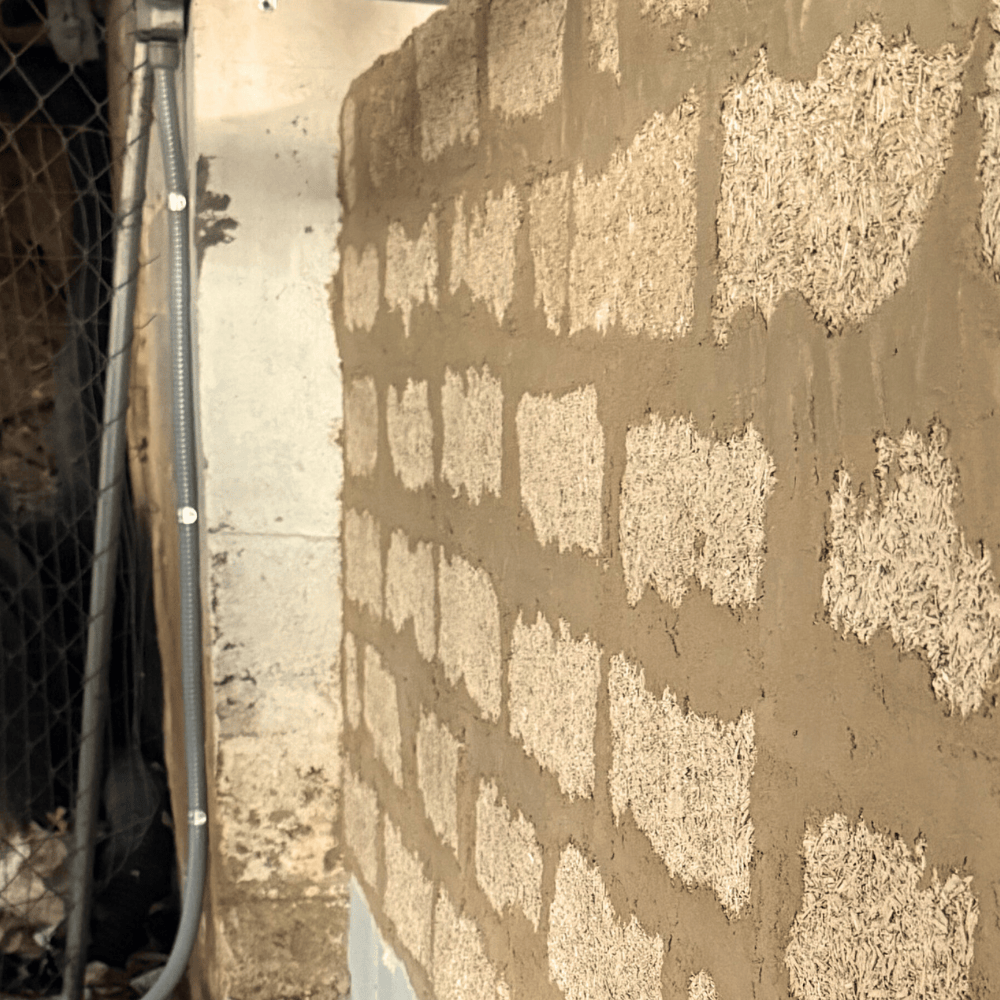
Hempcrete works differently. While it still has an R-value, focusing only on that number misses what actually makes it effective. As more builders explore hemp-based building materials, the conversation is shifting from single metrics to whole-system performance.
What the Numbers Actually Show
Hempcrete typically falls within an R-value range of about 2.8 to 3.7 per inch, depending on the specific mix and density used. That places it in a similar category to many common insulation materials such as fiberglass or mineral wool when viewed purely from a resistance standpoint.
When compared to structural materials, however, the difference becomes much more noticeable. Standard concrete has an R-value of roughly 0.2 per inch, while traditional wood framing sits closer to 1.25 per inch. In that context, hempcrete isn’t just filling space—it’s actively contributing insulation as part of the wall system.
Thermal conductivity also plays a role. Hempcrete has relatively low conductivity compared to conventional materials, meaning heat moves through it more slowly. This reinforces its ability to function as insulation, but it still doesn’t tell the full story of how the material performs over time.
Thermal Inertia and Why It Changes Everything
The real difference shows up when you look at how hempcrete handles heat throughout the day. Instead of simply resisting heat flow at a single moment, hempcrete slows it down and spreads that movement over time.
This behavior is tied to thermal inertia. Hempcrete absorbs heat and releases it gradually, creating what is known as a phase shift. Rather than allowing temperature changes to pass directly through a wall, the material delays that transfer.
In practical terms, this means that heat from the warmest part of the day may not reach the interior of a building until much later, often when outdoor temperatures have already dropped. This delay can range from several hours to nearly a full day depending on wall thickness and system design.
That shift fundamentally changes how a building behaves. Instead of reacting immediately to outdoor conditions, the interior environment stays more stable and predictable.
Real-World Impact on Comfort and Energy Use
This delayed heat movement has a direct effect on how buildings perform in everyday conditions. During warmer months, traditional insulation allows heat to steadily move inward, forcing cooling systems to constantly compensate.
With hempcrete, that process is slowed significantly. The wall absorbs heat during peak hours and releases it later, reducing the overall demand on mechanical systems. The building is no longer fighting rapid temperature swings, which can improve both comfort and efficiency.
The same principle applies in colder conditions. Heat generated inside the building remains within the structure for longer periods, reducing how frequently heating systems need to cycle on.
As more builders evaluate high-performance insulation systems, this type of stability is becoming just as important as raw R-value.
Moisture Regulation as a Performance Advantage
Another key difference between hempcrete and traditional insulation is how it handles moisture. Many standard materials are highly sensitive to damp conditions. When they absorb moisture, their insulating ability can drop significantly, and in tightly sealed wall systems, that moisture can become trapped.
Hempcrete behaves differently. It is naturally breathable and capable of absorbing and releasing moisture without losing its effectiveness. This allows the wall system to regulate humidity levels instead of trapping them.
Over time, this reduces the likelihood of mold growth, condensation issues, and long-term structural damage. It also contributes to a more stable indoor environment, where both temperature and humidity remain balanced.
This type of performance is part of why companies like Pure Industrial are continuing to expand into industrial hemp applications focused on building materials.
Looking Beyond a Single Metric
R-value still matters. It provides a useful baseline for comparing materials and understanding how they perform under standard conditions. But it was never designed to capture the full behavior of materials like hempcrete.
What ultimately matters is how a wall system performs as a whole. That includes how it handles heat over time, how it responds to moisture, and how it reduces reliance on mechanical heating and cooling.
Hempcrete brings all of these elements together into a single system. It combines insulation, thermal mass, and moisture regulation in a way that traditional materials typically separate into multiple layers.
As construction continues to evolve, the focus is shifting away from isolated numbers and toward materials that deliver consistent performance in real-world conditions. Hempcrete fits into that shift by offering a more balanced and integrated approach to building.