
Hemp Fiber Uses in Construction, Automotive & Textiles
When people hear “hemp,” they often imagine one thing. In reality, industrial hemp is a two-material plant.
There is the woody inner core — called hemp hurd — and there is the outer bast fiber that surrounds it. That outer fiber is what this article focuses on. Hemp bast fiber is one of the strongest and most versatile natural fibers available at scale, and it is increasingly being used in insulation, automotive composites, erosion control systems, and modern textiles.
Hemp fiber is not new. What is new is how intentionally it is being processed, standardized, and integrated into industrial supply chains again.
Understanding what hemp fiber actually is — and how it differs from hurd — is the starting point.
What hemp fiber actually is (and where it comes from)
Hemp fiber comes from the bast layer of the hemp stalk — the tough, fibrous outer bark of the plant. Botanically, this layer is the phloem tissue that surrounds the woody core.
It is completely different from the inner hurd used in hemp-lime and bedding applications. The two materials behave differently, process differently, and serve different markets.
Hemp bast fiber is long, flexible, and naturally strong. Historically, it was used for rope, sailcloth, and textiles because of its tensile strength and durability. Today, those same properties are being adapted for modern insulation systems, automotive panels, and nonwoven technical applications.
When manufacturers refer to “hemp fiber,” they mean this outer bark — not the woody core.
How hemp fiber is processed
Turning a harvested hemp stalk into usable industrial fiber requires several controlled steps, each of which affects final quality.
The first step is retting, a natural microbial process that breaks down the pectin binding the fiber to the woody core. Retting can occur in the field through dew exposure or in water systems. The quality of retting directly influences fiber strength, color, and cleanliness. Under-retted fiber will not separate properly. Over-retted fiber loses structural integrity.
After retting, the stalk undergoes decortication, a mechanical process that separates bast fiber from hurd. At this stage, the fiber is strong but still mixed with small woody fragments called shives.
Further refinement occurs through scutching and hackling, which clean and align the fibers. This produces either long, clean line fiber or shorter tow fiber. Both are usable — they simply serve different end markets.
For textile and some nonwoven systems, hemp may undergo cottonization. This additional refinement removes more lignin and shortens the fibers so they can run on standard cotton machinery. Cottonization improves compatibility with modern equipment, but over-processing can reduce the strength that makes hemp valuable in the first place.
Processing discipline determines whether hemp fiber becomes a high-performance material or an inconsistent one.
Technical fiber vs. textile fiber
Much of the confusion around hemp fiber comes from assuming it is a single category.
Technical hemp fiber refers to decorticated fiber used in insulation batts, erosion control blankets, felts, mats, and biocomposites. In these applications, breathability, tensile strength, and moisture management matter more than softness.
Line fiber refers to longer, higher-quality strands that can be used in premium textiles or advanced composite reinforcement.
Tow fiber consists of shorter strands or broken fibers and is commonly used in nonwoven insulation and industrial materials.
None of these forms are waste. They are simply optimized differently depending on the application.
Where hemp fiber is being used today
Hemp fiber is not speculative. It is already integrated into multiple industrial sectors.
In building construction, nonwoven hemp fiber batts are used as an alternative to fiberglass insulation. One of their primary advantages is safe handling — they can be installed without protective gear. They are vapor permeable and hygroscopic, meaning they absorb moisture and release it later without trapping condensation inside wall assemblies. This contributes to improved indoor air quality and moisture regulation.
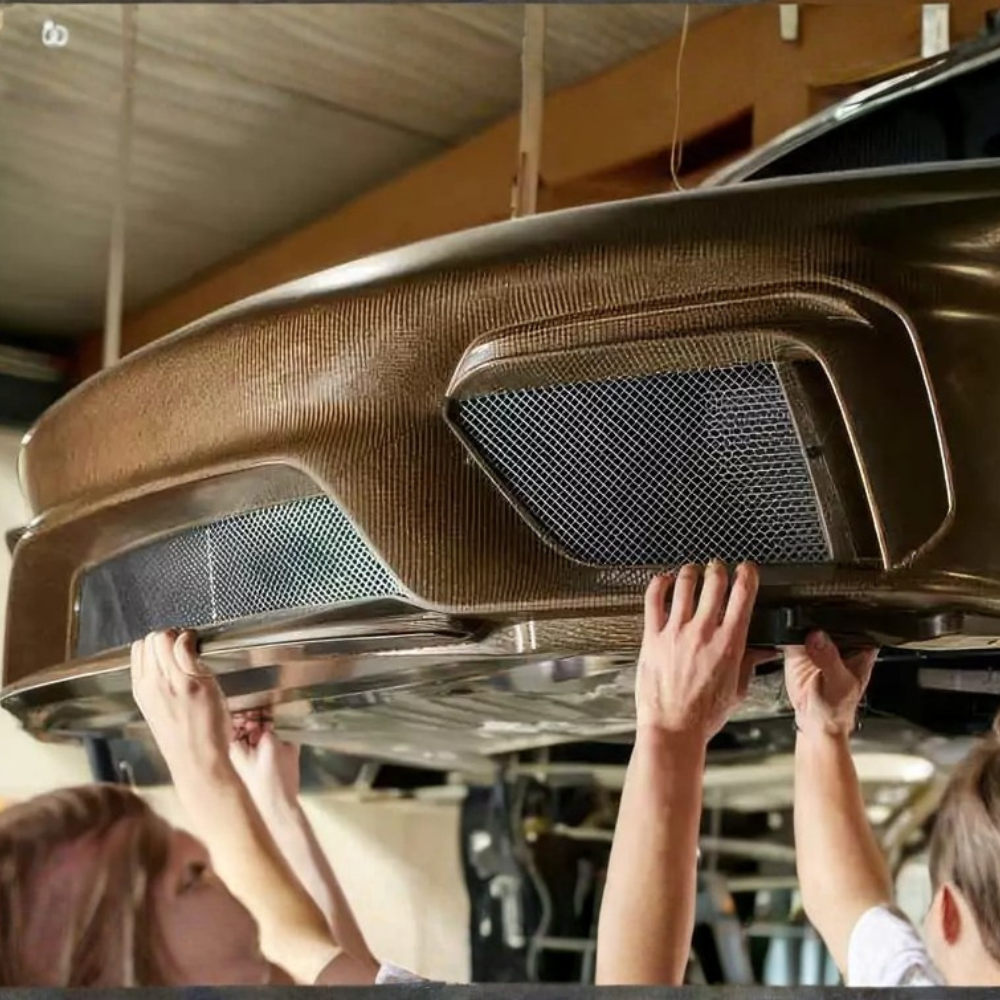
In automotive manufacturing, hemp fiber is used as reinforcement in biocomposite panels. Several manufacturers have incorporated natural fiber composites into vehicle components where strength-to-weight ratio and carbon reduction matter. A modern example is the Porsche 718 Cayman GT4 Clubsport, which integrates natural fiber composite panels in performance applications.
Hemp fiber is also used in erosion control and geotextile systems. Fiber mats stabilize slopes and suppress weeds, then biodegrade naturally rather than persisting as synthetic waste.
In textiles, modern hemp fabrics often blend hemp with cotton or wool. When processed correctly through controlled degumming and cottonization, hemp textiles can be soft, breathable, and durable. Roughness typically reflects processing shortcuts rather than inherent material limitations.
Common questions about hemp fiber
Hemp fiber is frequently confused with hempcrete, but they are separate materials. Hempcrete uses the inner hurd combined with lime. Hemp fiber is the outer bast layer used in insulation, mats, composites, and textiles.
Hemp insulation does not itch like fiberglass. One of its key advantages is safe, comfortable handling during installation.
Hemp fiber can replace carbon fiber in certain automotive applications, but not universally. It performs well in semi-structural composite systems where weight reduction and sustainability are priorities.
Hemp fiber is hygroscopic, meaning it absorbs and releases moisture. As long as assemblies are designed to allow drying, it resists mold growth better than many vapor-trapping synthetic materials.
Domestic hemp fiber production is expanding again in the United States, including regions like Virginia and Montana, reducing reliance on imported fiber streams.
Important clarifications
Hemp fiber is powerful, but it is not self-performing without context.
Fire resistance in insulation products typically comes from mineral or soda treatments rather than the fiber alone. Retting quality affects consistency and appearance. Cottonization improves spinnability but may reduce tensile strength if overdone. And hemp fiber is not used in hemp-lime masonry — that application belongs to hurd.
Like any industrial material, performance depends on processing quality and system design.
Why bulk hemp fiber sourcing matters
Hemp fiber is used at industrial scale — in wall assemblies, automotive parts, mats, and rolls — which means supply consistency is critical.
Manufacturers need predictable fiber length, cleanliness, moisture levels, and availability. Without reliable bulk sourcing, hemp remains a prototype material rather than a production input.
Pure Industrial supplies bulk hemp fiber from domestic sources, supporting builders, manufacturers, and product developers who require consistent quality and dependable supply chains. When fiber becomes standardized and available at scale, it becomes usable in real production environments.
The takeaway
Hemp fiber is not a niche sustainability trend.
It is a strong, breathable, adaptable natural fiber already proving itself in insulation, transportation, erosion control, and textiles. As domestic processing capacity expands and supply chains mature, hemp bast fiber is moving from specialty material to industrial input.
Its future depends not on novelty, but on disciplined processing and reliable sourcing.