
Hemp as a Carbon Negative Building Material: How It Actually Works
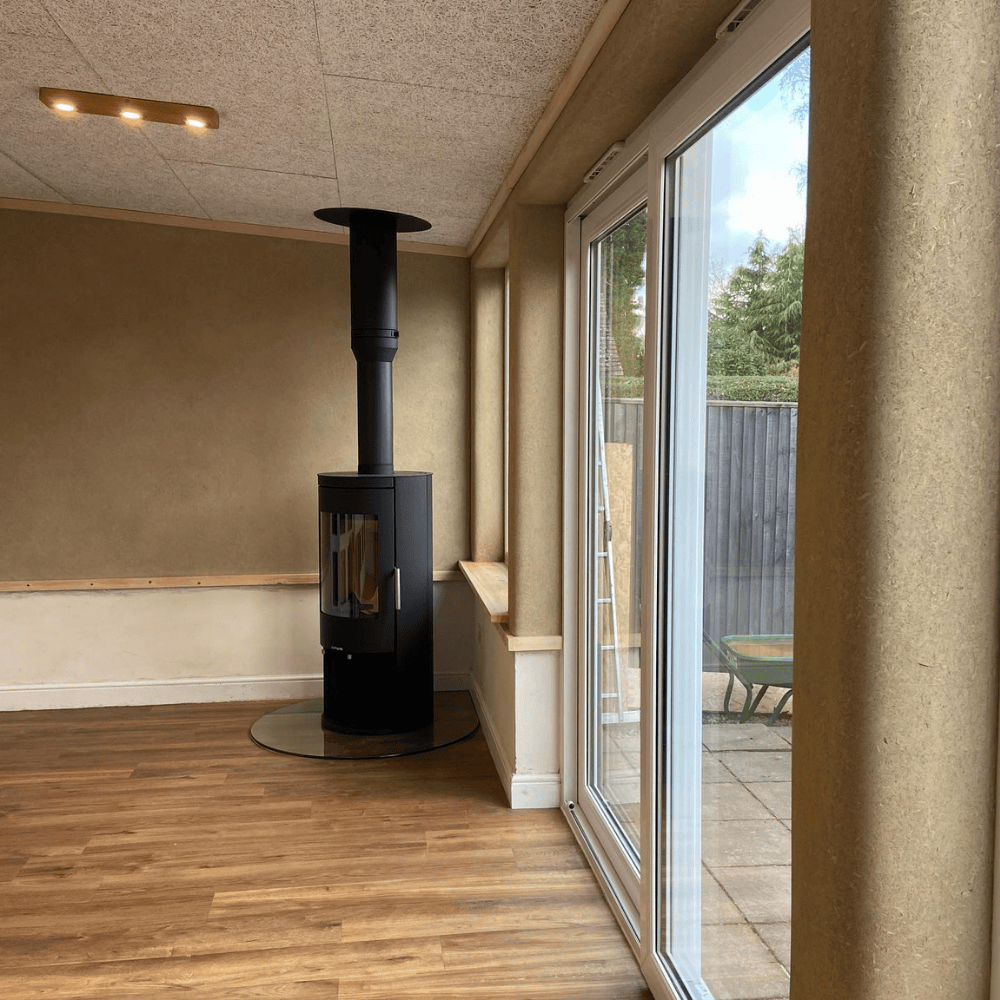
The way we build has a bigger impact than most people realize. Today, the construction industry is responsible for a significant portion of global carbon emissions, driven largely by the materials used to construct buildings and the energy they consume over time.
Concrete and steel dominate modern construction, but both come with a massive environmental cost. Materials like cement are among the largest contributors to embodied carbon in the built environment, which is why reducing reliance on them has become a major focus across the industry.
That’s why more attention is starting to shift toward alternatives like hemp—not just because they are sustainable, but because they introduce a fundamentally different model where materials can reduce emissions instead of adding to them.
How Hemp Acts as a Carbon Sink
Before hemp ever becomes a building material, it’s already doing something most materials can’t: removing carbon from the atmosphere.
Through the process of carbon sequestration, hemp absorbs carbon dioxide as it grows and stores it within its biomass. Because hemp grows rapidly—reaching maturity in just a few months—it captures carbon at a much faster rate than traditional timber or other crops.
This is where hemp carbon capture becomes highly relevant. Instead of relying solely on reducing emissions, hemp actively pulls carbon out of the atmosphere during cultivation, making it one of the few materials that begins its lifecycle as a net positive.
From Plant to Material: Locking Carbon Into Buildings
Once hemp is harvested, the inner core of the plant is processed into materials like hempcrete. At that point, the carbon captured during growth remains locked within the material itself.
This creates a major shift in how we think about building materials. Instead of contributing to emissions, hemp-based materials can store carbon long-term within walls, insulation systems, and structural fills.
In many cases, hemp-based systems can even be considered carbon negative, meaning they store more carbon than is emitted during production and installation. That’s a completely different outcome compared to traditional materials like concrete, which release carbon during manufacturing.
Why Hempcrete Goes Beyond Carbon Storage
Hempcrete doesn’t just store carbon—it continues interacting with the environment over time.
The lime binder used in hempcrete undergoes carbonation as it cures, absorbing carbon dioxide from the air and gradually converting back into a limestone-like state. This means the material continues contributing to carbon reduction even after construction is complete.
However, the formulation matters. Systems that rely too heavily on cement instead of lime can reduce these benefits, which is why proper material design is critical to maintaining hemp’s carbon-negative potential.
Reducing Carbon Through Building Performance
Carbon impact doesn’t stop at construction. It continues throughout the life of a building.
Hemp-based materials offer strong thermal performance, helping regulate indoor temperatures by slowing heat transfer. This reduces the need for constant heating and cooling, lowering overall energy consumption over time.
That reduction plays a major role in improving a building’s overall carbon footprint. Instead of focusing on just one phase of construction, hemp addresses both the materials used and the long-term performance of the building itself.
How Industrial Hemp Fits Into Scalable Solutions
As demand for low-carbon materials continues to grow, the conversation is shifting from theory to implementation.
Companies like Pure Industrial are focused on developing scalable hemp-based materials that align with real-world construction needs. By building out domestic supply chains and refining processing methods, industrial hemp is becoming more accessible for use in construction, manufacturing, and other large-scale applications.
This shift is critical. Materials don’t become standard because they exist—they become standard when they can be produced consistently, meet regulatory requirements, and integrate into existing systems.
Why This Shift Matters Moving Forward
The construction industry is under increasing pressure to reduce emissions, and materials are at the center of that conversation.
Hemp offers a unique combination of benefits. It grows quickly, captures carbon efficiently, stores that carbon in usable materials, and improves building performance over time.
As more builders, developers, and manufacturers begin to adopt hemp-based systems, it moves out of the experimental category and into practical use. Over time, that transition has the potential to reshape how buildings are designed, constructed, and evaluated from an environmental perspective.
Instead of contributing to emissions, buildings can start functioning as part of the solution.